Cybersecurity
Why the Browser Is Becoming the New Security Perimeter
Modern cyber attacks are increasingly targeting browsers, sessions, extensions, plugins, and trusted workflows instead of only attacking servers directly. Learn why cybersecurity is changing dramatically in 2026.
Published: May 28, 2026
Last updated: May 28, 2026
In this article
- 1.The Backend May Still Look Completely Normal
- 2.The Attack Surface Has Expanded Dramatically
- 3.Attackers Increasingly Target Trusted Workflows
- 4.Why Browser Security Matters More Than Ever
- 5.Some of the Most Dangerous Attacks Today
- 6.Why MFA and Strong Passwords Are No Longer Enough
- 7.Businesses Need to Rethink Trust
- 8.Things Worth Reviewing Immediately
- 9.Final Thoughts
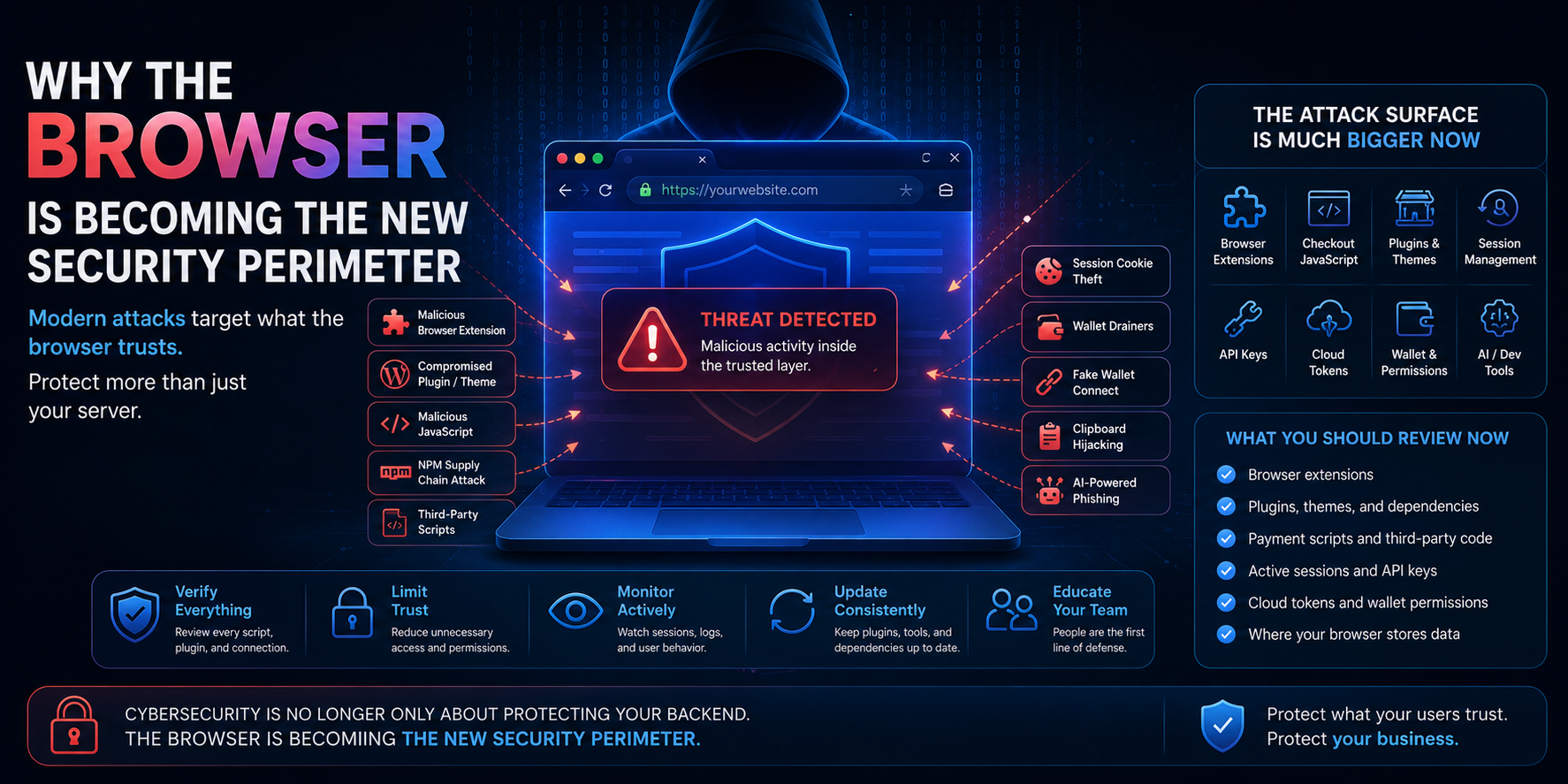
Most people still think “getting hacked” means someone breaking into a server or stealing a password.
But modern cyber attacks are changing rapidly.
After spending the last few days researching modern attack methods more deeply, especially after security issues recently affected my husband’s accounts and one of our business partners, I realized something important:
Modern attacks increasingly target what the browser trusts.
And honestly, that changes everything.
The Backend May Still Look Completely Normal
One of the most dangerous parts of modern cyber attacks is that many businesses may not immediately realize they have already been compromised.
The website may still:
• load normally
• process orders
• accept logins
• and show no obvious warning signs
The backend itself may still appear completely functional.
But behind the scenes, malicious scripts, compromised browser sessions, infected plugins, malicious extensions, or supply-chain compromises may already be operating silently inside the workflow.
This is one reason why some businesses say:
“Our server was never hacked.”
Yet customers still lose money.
The Attack Surface Has Expanded Dramatically
Traditional cybersecurity mainly focused on:
• servers
• databases
• passwords
• and network access
But modern attack surfaces now include much more:
• browser extensions
• checkout JavaScript
• WordPress plugins
• WooCommerce plugins
• npm packages
• API keys
• session cookies
• cloud tokens
• wallet connection flows
• AI development tools
• third-party scripts
• and even the administrator’s own computer
This changes how businesses need to think about security.
Attackers Increasingly Target Trusted Workflows
One of the biggest shifts happening right now is that attackers often no longer need to directly steal passwords.
Instead, they increasingly attempt to compromise:
• trusted browser sessions
• authenticated workflows
• wallet permissions
• browser extensions
• or frontend scripts already trusted by users
If attackers can hijack an authenticated browser session or manipulate a trusted interface, they may gain access without triggering traditional “account hacked” warnings.
This is one reason why modern attacks are becoming harder to detect.
Why Browser Security Matters More Than Ever
The browser itself is increasingly becoming part of the infrastructure layer.
Modern businesses rely heavily on:
• browser-based SaaS tools
• cloud dashboards
• extensions
• AI assistants
• automation platforms
• crypto wallets
• admin panels
• and API integrations
This creates a much larger trust surface than most organizations realize.
Many businesses still focus heavily on protecting:
• servers
• passwords
• and backend systems
while underestimating risks connected to:
• frontend scripts
• extensions
• session management
• browser trust
• and supply-chain dependencies
Some of the Most Dangerous Attacks Today
Several modern attack methods are growing rapidly across the industry.
These include:
• Magecart checkout skimmers
• malicious JavaScript injections
• npm supply-chain attacks
• browser session theft
• wallet drainers
• clipboard hijacking malware
• malicious browser extensions
• fake wallet-connect popups
• token theft
• and AI-assisted phishing or malware generation
Many of these attacks leave very few visible traces.
The website itself may still appear normal.
Passwords may remain unchanged.
Admins may continue logging in without realizing anything has already been compromised.
Why MFA and Strong Passwords Are No Longer Enough
Strong passwords and multi-factor authentication still matter.
But modern attacks increasingly target what happens after authentication succeeds.
This includes:
• active browser sessions
• stored cookies
• connected APIs
• browser tokens
• extension permissions
• wallet approvals
• and trusted frontend workflows
This is why businesses relying only on password security may still remain highly vulnerable.
Businesses Need to Rethink Trust
Modern cybersecurity is increasingly becoming a trust-management problem.
Every extension, script, plugin, integration, API, or browser session creates another potential trust layer.
The more connected modern systems become, the more important it becomes to evaluate:
• what your browser trusts
• what scripts your website loads
• what extensions employees use
• what third-party tools access your data
• and how sensitive sessions are managed
This is especially important for businesses working in:
• SaaS
• online payments
• WordPress / WooCommerce
• AI tools
• crypto
• automation
• cloud infrastructure
• SEO operations
• and browser-heavy workflows
Things Worth Reviewing Immediately
Some important areas worth reviewing include:
• browser extensions
• WordPress plugins and themes
• npm and GitHub dependencies
• payment page scripts
• active browser sessions
• API keys
• cloud access tokens
• wallet permissions
• connected third-party services
• and where sensitive browser data is stored
Modern attacks increasingly target overlooked trust relationships rather than brute-force access itself.
Final Thoughts
Cybersecurity is no longer only about protecting the backend.
Modern attacks increasingly target the browser layer, trusted workflows, session management, extensions, integrations, and supply-chain dependencies.
The browser is becoming part of the infrastructure itself.
And in many ways, it is becoming the new security perimeter.
Q: Why are browsers becoming a cybersecurity target?
A: Modern businesses increasingly rely on browsers for SaaS tools, cloud platforms, wallets, AI tools, admin dashboards, and sensitive workflows, making browsers a valuable attack surface.
Q: What are browser-based cyber attacks?
A: Browser-based attacks include malicious extensions, session theft, JavaScript injections, wallet drainers, supply-chain attacks, and attacks targeting trusted frontend workflows.
Q: Can attackers bypass passwords and MFA?
A: In some cases, yes. Attackers may steal authenticated browser sessions, cookies, tokens, or manipulate trusted workflows without needing the actual password.
Q: What is a supply-chain attack?
A: A supply-chain attack happens when attackers compromise trusted third-party software, plugins, libraries, or dependencies used by websites or businesses.
Q: Why is frontend security becoming more important?
A: Modern attacks increasingly target browser trust, scripts, extensions, APIs, and connected workflows instead of attacking only backend infrastructure.
Core reading
Frequently asked questions
Blog post FAQ
Why are browsers becoming a cybersecurity target?
Modern businesses increasingly rely on browsers for SaaS tools, cloud platforms, wallets, AI tools, admin dashboards, and sensitive workflows, making browsers a valuable attack surface.
What are browser-based cyber attacks?
Browser-based attacks include malicious extensions, session theft, JavaScript injections, wallet drainers, supply-chain attacks, and attacks targeting trusted frontend workflows.
Can attackers bypass passwords and MFA?
In some cases, yes. Attackers may steal authenticated browser sessions, cookies, tokens, or manipulate trusted workflows without needing the actual password.
What is a supply-chain attack?
A supply-chain attack happens when attackers compromise trusted third-party software, plugins, libraries, or dependencies used by websites or businesses.
Why is frontend security becoming more important?
Modern attacks increasingly target browser trust, scripts, extensions, APIs, and connected workflows instead of attacking only backend infrastructure.
Sources and references
Reference sources used to support SEO, search, and authority-building context.
Author

Lalida Pimpa
Founder, SEO Boost Link
Lalida Pimpa is the founder of SEO Boost Link, an editorial backlink and authority strategy platform focused on SaaS, B2B, and digital-first brands. Her work centers on editorial relevance, entity-based SEO, AI visibility, and long-term authority building through contextual placements and search-aligned content systems.
With experience across SEO, lead generation, and digital growth strategy, she focuses on how modern search engines and AI systems interpret trust, topical relevance, and brand relationships across the web.
LinkedInFocus Areas
- •Editorial link building
- •AI search visibility
- •Entity-based SEO
- •Editorial placement strategy
Related Articles
AI Search Visibility Is Now Measurable: What SEO Teams Should Track in 2026
AI visibility is no longer something brands have to guess. Google and Bing are beginning to expose how websites appear inside AI-generated search experiences. Here is what SEO teams should measure now, what the data actually means, and where authority building fits into the picture.
When AI Agents Become Your Second Audience: Why Digital Authority Is Evolving Beyond Search Rankings
AI is creating a second audience for your content. Alongside human readers, intelligent systems are increasingly retrieving, evaluating, and synthesizing information before presenting it to users. This shift doesn't replace SEO, but it expands what digital authority means and how businesses should think about long-term visibility.
The AI Citation Gap: Why Great Content Still Doesn't Get Cited
Ranking on Google no longer guarantees visibility in AI-generated answers. Learn why AI citations follow different discovery mechanisms and how to build authority across both search engines and AI.
The AI Model Race Is Ending. The Ecosystem Race Has Already Begun.
The biggest AI announcements are no longer about benchmark scores. They're about infrastructure, developer ecosystems, enterprise workflows, and trust. This shift could fundamentally change how businesses choose AI platforms—and how brands earn visibility in AI-powered search.