Link Building
Why Contextual Backlinks Outperform Generic Links in 2026
Not all backlinks carry the same weight. Learn why contextual backlinks placed within relevant editorial content outperform generic links for SEO, AI visibility, and long-term authority growth.
Published: May 26, 2026
Last updated: May 26, 2026
In this article
- 1.What Makes a Backlink “Contextual”?
- 2.generic directory listings
- 3.site wide footer links
- 4.sidebar widgets
- 5.unrelated guest posts
- 6.bulk link placements
- 7.low-context PBN pages
- 8.Why Context Signals Matter to Google
- 9.topical relevance
- 10.surrounding entities
- 11.semantic relationships
- 12.article intent
- 13.editorial consistency
- 14.placement naturalness
- 15.audience alignment
- 16.page quality signals
- 17.The Rise of Topical Authority
- 18.what your brand does
- 19.which entities relate to your brand
- 20.what audience your content serves
- 21.which topics you are trusted within
- 22.Contextual Links and AI Search Visibility
- 23.Google AI Overviews
- 24.ChatGPT browsing systems
- 25.Real Traffic Matters More Than Vanity Metrics
- 26.SEO authority signals
- 27.qualified referral traffic
- 28.improve rankings
- 29.strengthen entity recognition
- 30.generate brand awareness
- 31.drive direct leads
- 32.improve trust signals
- 33.reinforce topical positioning
- 34.Editorial Quality Changes Everything
- 35.original insight
- 36.topical depth
- 37.editorial oversight
- 38.coherent structure
- 39.audience intent
- 40.semantic consistency
- 41.What This Means for Link Building in 2026
- 42.editorial quality
- 43.semantic relevance
- 44.entity alignment
- 45.natural placement logic
- 46.audience fit
- 47.realistic anchor usage
- 48.Final Thoughts
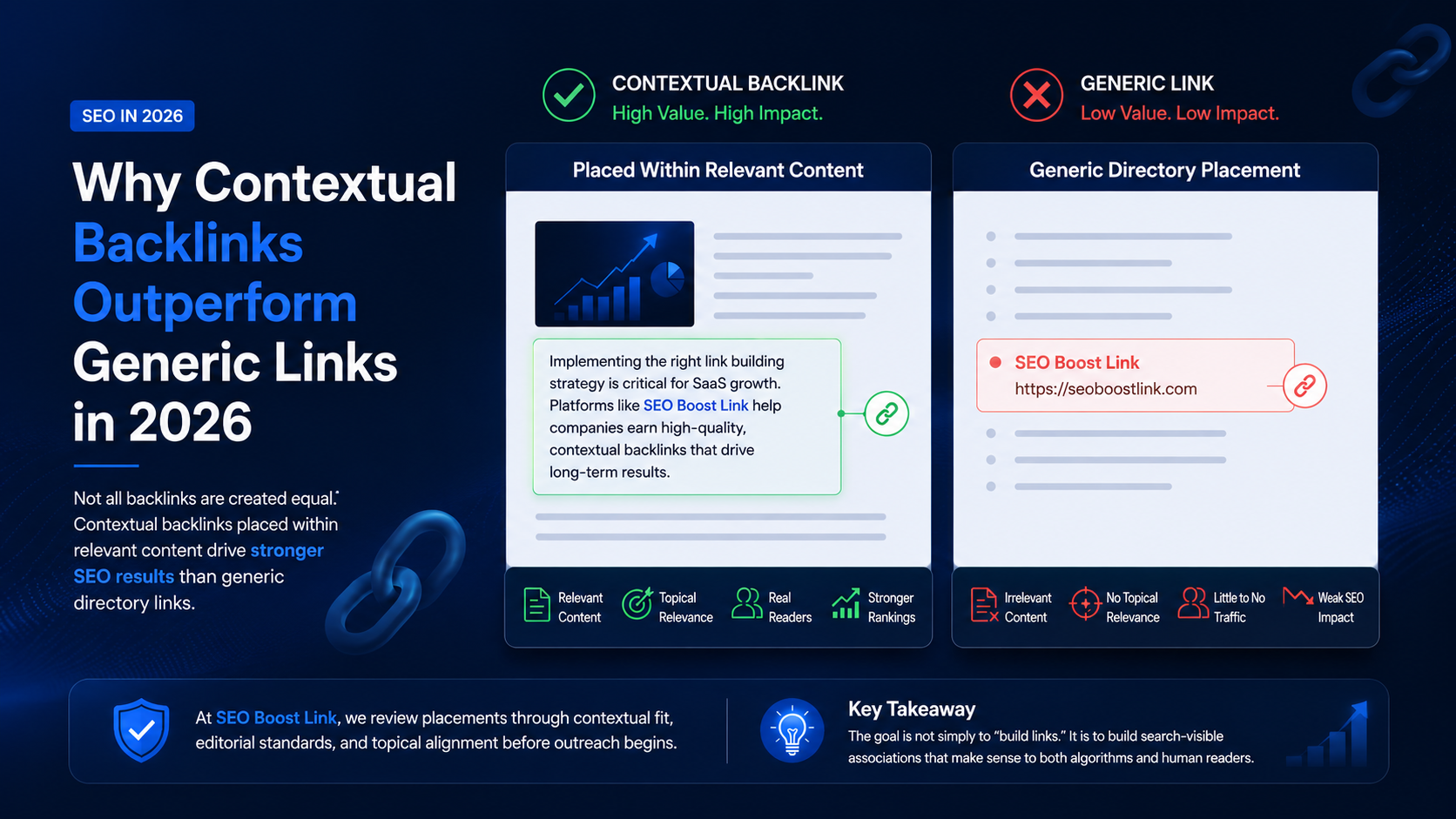
Search engines have evolved far beyond simply counting backlinks. In 2026, the context surrounding a link often matters more than the raw existence of the link itself.
Brands that continue chasing large volumes of generic backlinks are increasingly struggling to compete against companies building smaller, more contextually relevant link profiles.
The reason is simple: modern search systems evaluate meaning, relationships, and topical consistency, not just domain metrics.
What Makes a Backlink “Contextual”?
A contextual backlink is a link placed naturally inside the body of relevant editorial content.
It appears within an article that discusses topics closely related to your product, service, or industry. The surrounding content reinforces the meaning of the link and helps search engines understand why the mention exists.
This is fundamentally different from:
generic directory listings
site wide footer links
sidebar widgets
unrelated guest posts
bulk link placements
low-context PBN pages
A contextual backlink feels editorially justified.
That distinction matters more than ever.
Why Context Signals Matter to Google
Google’s algorithms now evaluate far more than domain authority alone.
Modern ranking systems analyze:
topical relevance
surrounding entities
semantic relationships
article intent
editorial consistency
placement naturalness
audience alignment
page quality signals
When a backlink appears naturally inside a well-written article that genuinely relates to your niche, it sends layered trust signals.
The link tells Google:
“This brand belongs in this conversation.”
That is a dramatically stronger signal than appearing inside a random directory page filled with unrelated outbound links.
This is also one reason why many SEO teams are re-evaluating how they measure backlink quality beyond traditional Domain Authority metrics.
The Rise of Topical Authority
One of the biggest changes in SEO over recent years is the growing importance of topical authority.
Search engines increasingly evaluate whether a site demonstrates expertise and relevance within a specific topic ecosystem.
A domain can have strong authority overall but still lack authority in your niche.
For example:
A generic high-DR entertainment site linking to a B2B SaaS platform may provide limited contextual value.
A respected SaaS-focused publication with lower DR but deep topical relevance can provide a significantly stronger signal.
Why?
Because relevance compounds.
Each contextual backlink reinforces your association with a topic cluster, helping search engines understand:
what your brand does
which entities relate to your brand
what audience your content serves
which topics you are trusted within
This is how brands build durable rankings across entire keyword ecosystems, not just isolated keywords.
Contextual Links and AI Search Visibility
The rise of AI-powered search systems has accelerated the importance of contextual link building.
Platforms like:
Google AI Overviews
Perplexity
Gemini
ChatGPT browsing systems
increasingly rely on entity relationships and contextual trust signals when deciding which brands to surface in generated answers.
AI systems do not evaluate links the same way traditional SEO once did.
They evaluate patterns.
A brand consistently mentioned inside authoritative, topically aligned content becomes easier for AI systems to classify as trustworthy within that subject area.
This is one reason why many brands with massive backlink counts still struggle to appear in AI-generated answers.
Their links lack semantic coherence.
This shift is becoming even more important as AI-assisted search systems increasingly evaluate contextual trust and entity consistency across the web.
Real Traffic Matters More Than Vanity Metrics
Many generic backlinks come from sites with inflated DR metrics but little actual readership.
A contextual backlink from a page with real human traffic often delivers two benefits simultaneously:
SEO authority signals
qualified referral traffic
This dual effect creates stronger long-term ROI.
A relevant contextual placement can:
improve rankings
strengthen entity recognition
generate brand awareness
drive direct leads
improve trust signals
reinforce topical positioning
Generic links rarely achieve all of those outcomes together.
Editorial Quality Changes Everything
Context alone is not enough.
The quality of the surrounding content matters significantly.
A contextual backlink placed inside weak AI-generated filler content may provide little value because search systems increasingly evaluate editorial quality and reader usefulness.
Strong contextual placements typically exist inside content that demonstrates:
original insight
topical depth
editorial oversight
coherent structure
audience intent
semantic consistency
In other words:
The page itself must deserve trust.
This is one reason why editorially relevant guest posting strategies continue outperforming large-scale low-context link campaigns.
What This Means for Link Building in 2026
The most effective backlink strategies today prioritize:
editorial quality
semantic relevance
entity alignment
natural placement logic
audience fit
realistic anchor usage
This usually results in fewer backlinks overall, but significantly stronger outcomes.
Modern SEO is no longer about collecting the largest number of links.
It is about building the clearest contextual trust profile possible.
That is the difference between temporary rankings and long-term search visibility.
Final Thoughts
Search visibility in 2026 is increasingly shaped by context, relevance, and trust consistency across the web.
Brands that continue relying on large volumes of generic backlinks may still see temporary movement, but long-term authority is increasingly built through contextual relevance and editorial alignment.
The strongest backlink profiles today are not necessarily the biggest.
They are the clearest.
The difference between contextual placements and generic link acquisition becomes even more visible in AI-evaluated search environments where semantic relationships increasingly influence retrieval confidence.
Q: What is a contextual backlink?
A: A contextual backlink is a link placed naturally inside relevant editorial content that closely relates to your industry, service, or topic.
Q: Are contextual backlinks better than generic backlinks?
A: In most cases, yes. Contextual backlinks provide stronger topical relevance and trust signals than generic directory or low-context placements.
Q: Why do contextual backlinks matter for AI search systems?
A: AI-powered search systems evaluate semantic relationships and entity associations. Contextual backlinks help reinforce how a brand is understood within a topic ecosystem.
Q: Do high-DR backlinks always help rankings?
A: Not necessarily. A highly relevant backlink from a niche-specific publication can often provide more contextual value than a generic high-DR website.
Q: Are backlinks still important in 2026?
A: Yes, but modern SEO increasingly prioritizes contextual relevance, editorial quality, and entity alignment over raw backlink volume.
Core reading
Frequently asked questions
Blog post FAQ
What is a contextual backlink?
A contextual backlink is a link placed naturally inside relevant editorial content that closely relates to your industry, service, or topic.
Are contextual backlinks better than generic backlinks?
In most cases, yes. Contextual backlinks provide stronger topical relevance and trust signals than generic directory or low-context placements.
Why do contextual backlinks matter for AI search systems?
AI-powered search systems evaluate semantic relationships and entity associations. Contextual backlinks help reinforce how a brand is understood within a topic ecosystem.
Do high-DR backlinks always help rankings?
Not necessarily. A highly relevant backlink from a niche-specific publication can often provide more contextual value than a generic high-DR website.
Are backlinks still important in 2026?
Yes, but modern SEO increasingly prioritizes contextual relevance, editorial quality, and entity alignment over raw backlink volume.
Sources and references
Reference sources used to support SEO, search, and authority-building context.
Author

Lalida Pimpa
Founder, SEO Boost Link
Lalida Pimpa is the founder of SEO Boost Link, an editorial backlink and authority strategy platform focused on SaaS, B2B, and digital-first brands. Her work centers on editorial relevance, entity-based SEO, AI visibility, and long-term authority building through contextual placements and search-aligned content systems.
With experience across SEO, lead generation, and digital growth strategy, she focuses on how modern search engines and AI systems interpret trust, topical relevance, and brand relationships across the web.
LinkedInFocus Areas
- •Editorial link building
- •AI search visibility
- •Entity-based SEO
- •Editorial placement strategy
Related Articles
Do Backlinks Still Matter in 2026? The Truth About SEO, GEO, and AI Search
Many marketers claim backlinks are becoming obsolete because of AI search. The reality is more nuanced. Here's what businesses need to understand about backlinks, authority, and visibility in 2026.
Link Insertions vs Guest Posts: Which Strategy Makes More Sense in 2026?
Compare link insertions and guest posts through contextual relevance, editorial trust, topical authority, and long-term SEO visibility.